
With sales on an evergreen trickle... Matt wanted a working business and a full life that made “just grind more” impossible.
Together we turned those quiet courses into open/closed launches with waitlists, built a six‑figure mentorship program from scratch, and then validated a new a new course by having customers pay him $15K to shape it before he recorded a lesson.
The same audience he was sure would “never pay high‑ticket” now buys through a clear ladder of courses, cohorts and 1:1, while he actually takes Sundays off.
The surprising part is how much of that came from structure and belief, not more products.
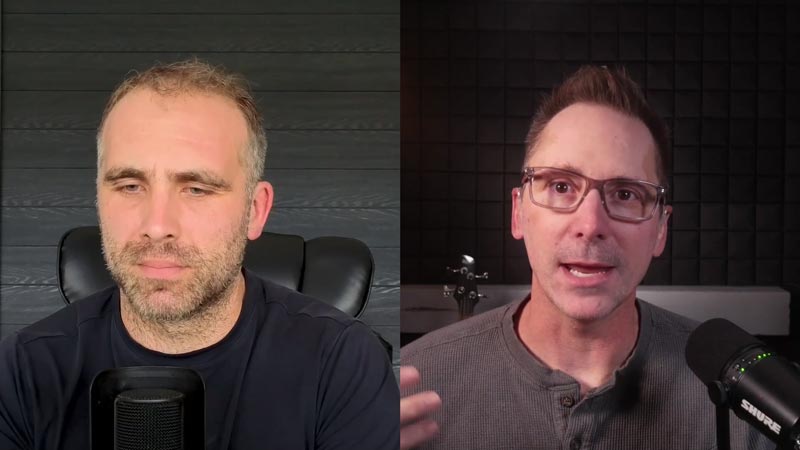
Most people are terrified to run ads. Not Matt Holmes.
He'd built two solid courses for self-published authors: *Facebook Ads for Authors* and *Amazon Ads for Authors*. Authors were buying them and getting results.
But sales looked more like a slow heartbeat than a strong pulse.
Everything was available at all times. A few students would trickle in. Some months spiked randomly. Others went quiet. No launches, no waitlists, no open-and-close windows, no story giving people a reason to act now.
When someone bought, it was because they stumbled across his courses at the right moment.
And there was nowhere for his best students to go. No ascension model. No high-ticket offer. No way to work more closely with him.
If you'd asked why, he would have said his "people" wouldn't pay for high-ticket. Practical authors, many early in their journey. They'd spend a couple hundred on a course, but never consider five-figure mentorship.
Underneath all this sat a constraint you wouldn't see in Stripe: three young kids needing Dad for school runs, a rural property with horses to feed and fields to clean twice daily, a life not built around twelve-hour workdays.
The starting point: two strong courses, no launch structure, no premium layer, and a full life that made "just work more" impossible.
He didn't need another product. He needed to turn what he'd built into a simple, deliberate system.
Turning a steady, quiet business into a high-demand one
Before building anything new or charging more, we tackled something simpler: Would his audience respond if he gave them a clear reason to buy *now*?
Everything was "always on." People joined his list, wandered around, occasionally bought. The courses were selling, but there was no momentum behind any of it.
We transformed his evergreen courses into open/closed offers with real demand building. The unsexy essentials:
Waitlists for each course. Raising your hand in advance changes how people relate to an offer.
Warm-up sequences that clarified the problem, shared student outcomes, and announced when enrollment would open.
Clear enrollment windows. The cart opens and closes on specific dates. Miss it, join the waitlist.
What actually changed was the psychology around the offer, not the curriculum inside it.
When we opened the cart after warming the list, sales poured in as a wave. Same product, same lessons, presented as "this is the window" not "it's always there."
The same authors he'd assumed were "low-ticket only" were joining waitlists, responding to the story, and buying when given a clear opportunity.
This proved something crucial: His audience would respond to structure. They just needed a reason beyond "whenever you get around to it."
Then we turned to a premium offer.
Building a high-ticket mentorship offer from scratch
With launches in place, we turned to the gap: nowhere for his best people to go.
After each launch, a subset of authors who'd bought multiple courses, implemented, and gotten results were clearly hungry for deeper guidance.
They could only hope he'd answer a long email or rewatch lessons.
When we started designing a mentorship program, the old mindset returned: *"Authors won't pay high-ticket."*
Matt's not serving venture-backed SaaS founders. He'd never seen them buy above course pricing because he'd never offered anything above course pricing.
We broke the stalemate gradually.
We sketched what serious mentorship looks like for authors with traction: books in market, ad spend, an email list. Focus on decisions that compound: what to write next, how to price, how to scale ads, how to design a launch calendar around their reality.
Defined period, clear boundaries, so it wouldn't expand and take over his life.
And crucially, priced at a level making sense for both sides. Not "slightly more than a course." A true high-ticket offer.
We anchored the price to reality: students going from a few hundred monthly in royalties to low four or five figures when they got ads and launches right.
In that context, a few thousand for several months of collaboration sounded reasonable.
The first time he presented the offer, authors he already knew stepped forward immediately. They'd been *waiting*.
The objection "authors will never pay" didn't materialize. People not ready self-selected out. People ready didn't blink.
Within a short window, the mentorship offer booked well into six figures. An offer that hadn't existed.
The sequence matters: We proved his audience would respond to launches, *then* built high-ticket.
The premium arm didn't come from a magical new audience. It came from giving his existing audience structure and a clear next step.
Validation with a paid cohort instead of guessing
With launches and mentorship in place, the obvious next question: "Where does BookBub fit?"
Matt's instinct: *"I should build a course."* He was getting BookBub questions, knew more than the average author, had run experiments. The temptation was to disappear, build slides, record lessons, launch.
I stepped in: "Do not build this in the dark."
The question wasn't "Can you sell a BookBub course?" It was "Can you design a BookBub offer worth iterating on for years?"
My philosophy: prove the offer with paying students *before* you immortalize it as content.
So he launched a BookBub Accelerator: fixed-term cohort teaching authors BookBub ads, delivered live on Zoom with an active group chat, priced to feel serious but not scary.
Three things happened at once:
It made money. $15,000 before the course was built. The validation phase paid him to learn.
It gave him contact with reality. He saw where authors got confused, what they feared, which parts landed and which needed rewriting. Different author types surfaced edge cases he'd never considered.
It gave him language. Not his. *Theirs.* How they described wins, fears, breakthroughs. Those phrases became the copy and curriculum backbone.
Only after the cohort wrapped did he create the on-demand course.
By recording time, he wasn't guessing. He was codifying something that had survived contact with paying students.
When we wrapped a launch framework around it, the "new course" wasn't a bet. It was the next logical step in a working system. Six-figure initial launch.
When everything works "too well" at once
Then the structure that unlocked revenue created a new constraint: time.
For a while, Matt said "yes" to almost every interesting opportunity. That's how you wake up realizing you've over-corrected. The high-ticket program had become too big a piece of his week.
We went back to first principles: Who is mentorship really for? How many people can you serve deeply and still like your life?
We tightened mentorship to a smaller, curated roster with clearer criteria: multi-book authors with proven traction, ready to implement.
Mentorship became the peak of the ladder, not the default next step.
Courses feed cohorts. Cohorts feed a smaller set of 1:1 relationships. The model got cleaner as his week got lighter.
Tightening the backend
While working on offers, we quietly tightened backend economics.
Rather than invent new front-end products, we asked: "How much more can we make from each buyer in the first 30 days without compromising experience?"
We got more deliberate with what he had. His Amazon Ads negative keyword pack became a clearer bump. The email-course version became a formal add-on for authors preferring daily bites in their inbox. We added an Ad Spend Insights tracker letting authors compare spend and sales across platforms at a glance.
The idea is simple: launches bring in buyers, and the backend makes each one worth more than what it cost to acquire them. That's what gives you margin to reinvest, keep front-end prices honest, and still have room for your life.
Matt's average order value went up without raising course prices or running more launches than he could stomach.
The founder operating system
Structural work is necessary, but not everything. If the founder's operating system is chaos, the business eventually follows.
One brutally uncomfortable change: No more working on Sundays.
It sounds trivial. In practice, it was a big psychological shift. Up until then, Sunday was just another day for catching up. His wife had told him more than once he needed a day off. Hearing it from an outside advisor finally gave him permission.
We paired that with structuring his week around one main project at a time, time-blocking for email instead of living in his inbox, and shifting from "If I'm not at the desk, the business will implode" to "The system is allowed to work without me pushing it 24/7."
The other layer was internal: the imposter signal that flared when his wife's book series Amazon rank slipped.
Because her books are public and he'd used that story in his marketing, he felt outsized exposure when performance dipped. It triggered, "How can I teach ads when my own household catalog isn't constantly at its peak?"
We didn't hand-wave that away. We talked about the reality that when you shift time from one area to another, short-term numbers move. The difference between being dishonest and being imperfect. The weight of aggregate proof: hundreds of authors using his frameworks across genres, some literally changing their family's financial trajectory.
That didn't eliminate the feeling overnight. But it gave him a more accurate lens to interpret it.
You can build all the structure you want, but if you don't trust yourself to run it, the first bad week will undo everything.
Where he is now
Matt still runs a lean operation. Him, a few tools, contractors from time to time. A full, noisy life outside the laptop.
What's different is the clear logic to how his business works.
People don't just "find" courses. They join waitlists, get warmed up, then buy within defined windows.
His courses power clearer paths into deeper work for the right people.
The mentorship program is now an intentional, high-impact layer, right-sized to match his week.
New offers like BookBub aren't bets built in silence. They're validated, paid for and sharpened in front of real students before filming.
His backend offers quietly raise the value of each buyer instead of leaving money and impact on the table.
His calendar has more shape: Sundays off, fewer late-night scrambles, more time where "Dad" isn't half-checking notifications.
He didn't get there by chasing a silver bullet.
He got there by putting launch structure around what already worked, allowing himself to build a premium tier when evidence said it made sense, validating new layers with cohorts instead of guessing, and being willing to revisit and rebalance as success created new constraints.
If you're in a similar place where something already sells but it's all leaning on your personal grind and you don't have a clean way to work with your best buyers, the answer is usually simpler than you think. Figure out what deserves to be your flagship, build a staircase behind it, and decide what kind of life you're willing to build around all of that.
That's the work Matt and I did together.
Matt Holmes is the author of Facebook Ads Mastery for Authors, Amazon Ads Mastery for Authors, BookBub for Authors, and The 60 Minute Author Business.

Results may vary. Past client successes reflect individual efforts and unique circumstances; they don't guarantee similar outcomes. Your results depend on personal commitment, market conditions, and other variables.
How it works
If you're tired of the guesswork and costly mistakes of going alone, I'll help you:
This is not a “talk about your business forever” coaching program.
This is a focused engagement that helps you make one key decision and ship it.